
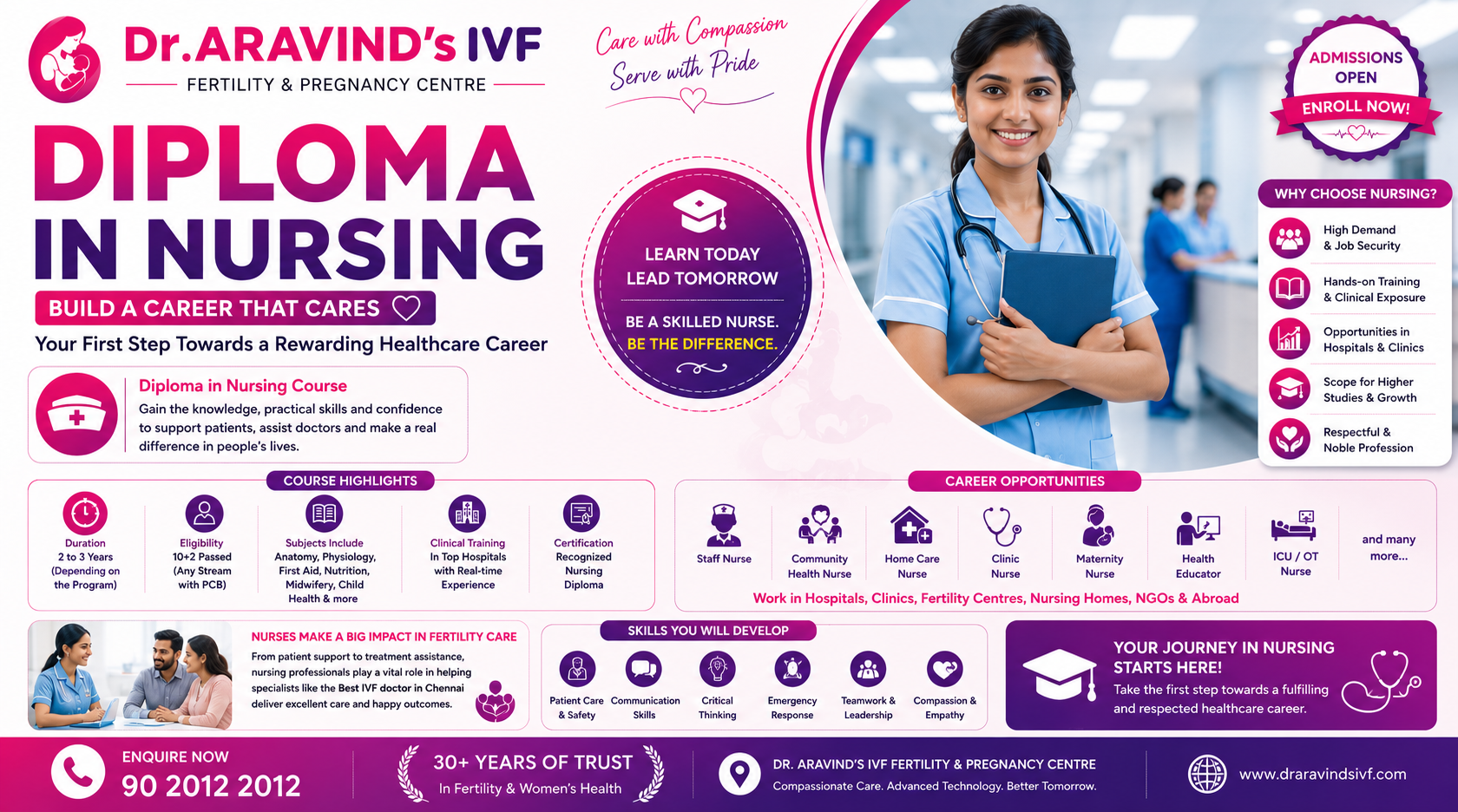
Diploma in Nursing: A Complete Guide to the Diploma in Nursing Course
The healthcare industry is one of the fastest-growing sectors worldwide, creating a strong demand for qualified nursing professionals. If you are passionate about patient care and want to build a rewarding healthcare career, pursuing a Diploma in Nursing can be an excellent first step.
A Diploma in Nursing Course provides students with the knowledge and practical skills needed to care for patients, assist doctors, support medical procedures, and promote community health. Nursing professionals are an essential part of every healthcare institution, from government hospitals to multispecialty centres and even a best IVF centre in Chennai, where compassionate patient care plays a vital role in successful fertility treatment.
This comprehensive guide explains everything you need to know about the Diploma in Nursing, including eligibility, duration, syllabus, career opportunities, salary, and whether a 1-year diploma course in nursing is available.
What is a Diploma in Nursing?
A Diploma in Nursing is a professional healthcare program that prepares students to become skilled nursing professionals. The course combines theoretical knowledge with practical clinical training, enabling students to provide quality patient care in hospitals, clinics, community healthcare centers, and specialized medical institutions.
Students learn how to monitor patients, assist doctors, administer medications, provide emergency care, maintain infection control, and support healthcare teams.
Why Choose a Diploma in Nursing Course?
Healthcare services continue to expand across India, increasing the need for qualified nurses. A Diploma in Nursing Course offers students an opportunity to enter the healthcare industry quickly while gaining practical experience and valuable clinical skills.
Some of the major benefits include:
- High demand for nursing professionals
- Excellent job security
- Practical clinical exposure
- Opportunities in India and abroad
- Career growth through higher education
- Meaningful contribution to patient care
- Stable and respected profession
Diploma in Nursing Course Highlights
The course focuses on both academic learning and hands-on clinical practice.
Students receive training in:
- Fundamentals of Nursing
- Human Anatomy and Physiology
- Community Health Nursing
- Medical-Surgical Nursing
- Child Health Nursing
- Midwifery
- Nutrition
- Pharmacology
- Infection Control
- Emergency Nursing
Clinical postings provide real-world experience in patient care.
Eligibility for Diploma in Nursing
Eligibility criteria vary among institutions, but generally include:
- Completion of 10+2 or equivalent from a recognized board
- Minimum qualifying marks as prescribed by the institution
- Meeting age and admission requirements
Some colleges may also conduct entrance tests or interviews.
Diploma in Nursing Course Duration
The duration depends on the type of nursing diploma chosen.
Common options include:
- ANM (Auxiliary Nurse Midwifery): Around 2 years
- GNM (General Nursing and Midwifery): Around 3 years
Students should verify the exact duration with the institution offering the course.
Is There a 1 Year Diploma Course in Nursing?
Many students search for a 1-year diploma course in nursing. However, in India, most recognized nursing diploma programs approved by regulatory authorities require more than one year because they include extensive classroom education and mandatory clinical training.
Some institutions may offer 1-year nursing-related certificate or assistant programs, but these are different from full nursing diploma programs such as ANM or GNM. Before enrolling, always verify whether the appropriate nursing authorities recognize the course.
Diploma in Nursing Course Syllabus
The curriculum is designed to build strong clinical and patient care skills.
Common subjects include:
- Anatomy and Physiology
- Fundamentals of Nursing
- Psychology
- Sociology
- Nutrition
- Medical-Surgical Nursing
- Pharmacology
- Community Health Nursing
- Pediatric Nursing
- Obstetric and Gynecological Nursing
- Mental Health Nursing
- First Aid
- Infection Prevention
- Clinical Practice
Practical hospital training forms an important part of the course.
Skills You'll Learn
A Diploma in Nursing Course helps students develop essential healthcare skills, including:
- Patient care
- Clinical assessment
- Vital signs monitoring
- Medication administration
- Emergency response
- Infection prevention
- Communication
- Teamwork
- Critical thinking
- Medical documentation
- Compassion and empathy
These skills prepare graduates to work confidently in healthcare settings.
Career Opportunities After Diploma in Nursing
Graduates have a wide range of employment opportunities.
Career options include:
- Staff Nurse
- Community Health Nurse
- Clinic Nurse
- Hospital Nurse
- Home Care Nurse
- ICU Assistant
- Emergency Care Nurse
- Nursing Supervisor
- Public Health Nurse
- Healthcare Educator
Both government and private healthcare institutions actively recruit qualified nursing professionals.
Diploma in Nursing in Fertility Hospitals
Nursing professionals play an important role in fertility care. At a best IVF centre in Chennai, nurses support fertility specialists by providing compassionate care throughout the patient's fertility journey.
Responsibilities may include:
- Assisting during fertility consultations
- Preparing patients for diagnostic procedures
- Monitoring patient health
- Supporting IVF treatment protocols
- Educating patients about medications
- Maintaining clinical documentation
- Providing emotional support to couples
Working in a fertility center offers valuable experience in reproductive healthcare and advanced clinical practices.
Salary After Diploma in Nursing
Salary depends on qualifications, employer, experience, and location.
Generally:
- Fresh graduates begin with entry-level nursing positions.
- Experienced nurses receive higher salaries and additional responsibilities.
- Nurses working in specialized hospitals often have better career growth opportunities.
Continuous learning and specialization can significantly improve earning potential.
Higher Education After Diploma in Nursing
Students can continue their education through:
- B.Sc. Nursing
- Post Basic B.Sc. Nursing
- M.Sc. Nursing
- Critical Care Nursing
- Emergency Nursing
- Operation Theatre Technology
- Hospital Administration
- Healthcare Management
- Public Health
Higher qualifications provide access to advanced clinical and leadership roles.
Why Choose Nursing as a Career?
Healthcare is becoming increasingly patient-centered, creating strong demand for qualified nurses.
Reasons to choose nursing include:
- Growing employment opportunities
- Stable healthcare career
- Global demand
- Professional respect
- Continuous learning
- Opportunities for specialization
- Personal satisfaction through patient care
The future of nursing remains highly promising.
Latest Trends in Nursing Education
Modern nursing education is evolving with technology and innovation.
Current trends include:
- AI-assisted patient monitoring
- Electronic Health Records (EHR)
- Telehealth nursing
- Simulation-based clinical learning
- Digital healthcare technologies
- Infection prevention advancements
- Patient-centered care
- Evidence-based nursing practice
- Smart healthcare systems
- Multidisciplinary healthcare collaboration
These advancements prepare students for the future healthcare environment.
How to Choose the Best Diploma in Nursing Course
Before enrolling, consider:
- Accreditation and recognition
- Experienced faculty
- Hospital affiliations
- Clinical training opportunities
- Modern laboratories
- Internship support
- Placement assistance
- Updated curriculum
- Student support services
- Career guidance
Choosing a recognized institution with strong practical exposure can significantly improve career outcomes.
Conclusion
A Diploma in Nursing is an excellent choice for students who want to build a successful career in healthcare. The course provides strong clinical knowledge, practical experience, and diverse career opportunities across hospitals and healthcare institutions. Whether you work in a government hospital, private clinic, or a best IVF centre in Chennai, nursing professionals play a vital role in improving patient care and supporting better health outcomes. With continuous advancements in healthcare, nursing remains one of the most respected and rewarding professions in 2026.
(FAQs)
What is a Diploma in Nursing?
A Diploma in Nursing is a professional healthcare program that prepares students with theoretical knowledge and practical clinical skills to provide quality patient care.
Who can apply for a Diploma in Nursing Course?
Students who have completed 10+2 from a recognized board are generally eligible, subject to institutional admission criteria.
What is the duration of a Diploma in Nursing Course?
Most recognized diploma programs such as ANM and GNM take 2 to 3 years, including clinical training.
Is there a 1 year diploma course in nursing?
Most recognized nursing diploma programs in India are longer than one year. While some institutions may offer 1-year nursing assistant or healthcare certificate programs, they are not equivalent to full nursing diplomas like ANM or GNM.
Is Diploma in Nursing a good career?
Yes. Nursing offers excellent career opportunities, job security, and the chance to make a meaningful impact on patient care.